
ACL Rehab Protocol: Your Step-by-Step Guide to a Strong Recovery
Tearing your ACL can feel like a huge bump in the road. One minute you are playing your favorite sport, and the next, you are wondering if you will ever run again. The good news is that people recover from this every single day! To get back to your best self, you need a solid ACL rehab protocol. Think of this protocol as a detailed map for your recovery journey. It tells you exactly when to rest, when to move, and when to push a little harder. Following a plan helps your new ligament stay safe while your muscles get strong again.
Starting your journey might feel scary, but you are not alone. This guide is here to break everything down into small, easy steps. We will talk about how to manage pain, how to start walking, and how to eventually jump and run. A great ACL rehab protocol is not just about the knee; it is about building your confidence back up too. By taking things one day at a time, you will be surprised at how much progress you can make. Let’s dive into the details and get you started on the path to a healthy, happy knee.
Protecting Your New Knee (Weeks 0–2)
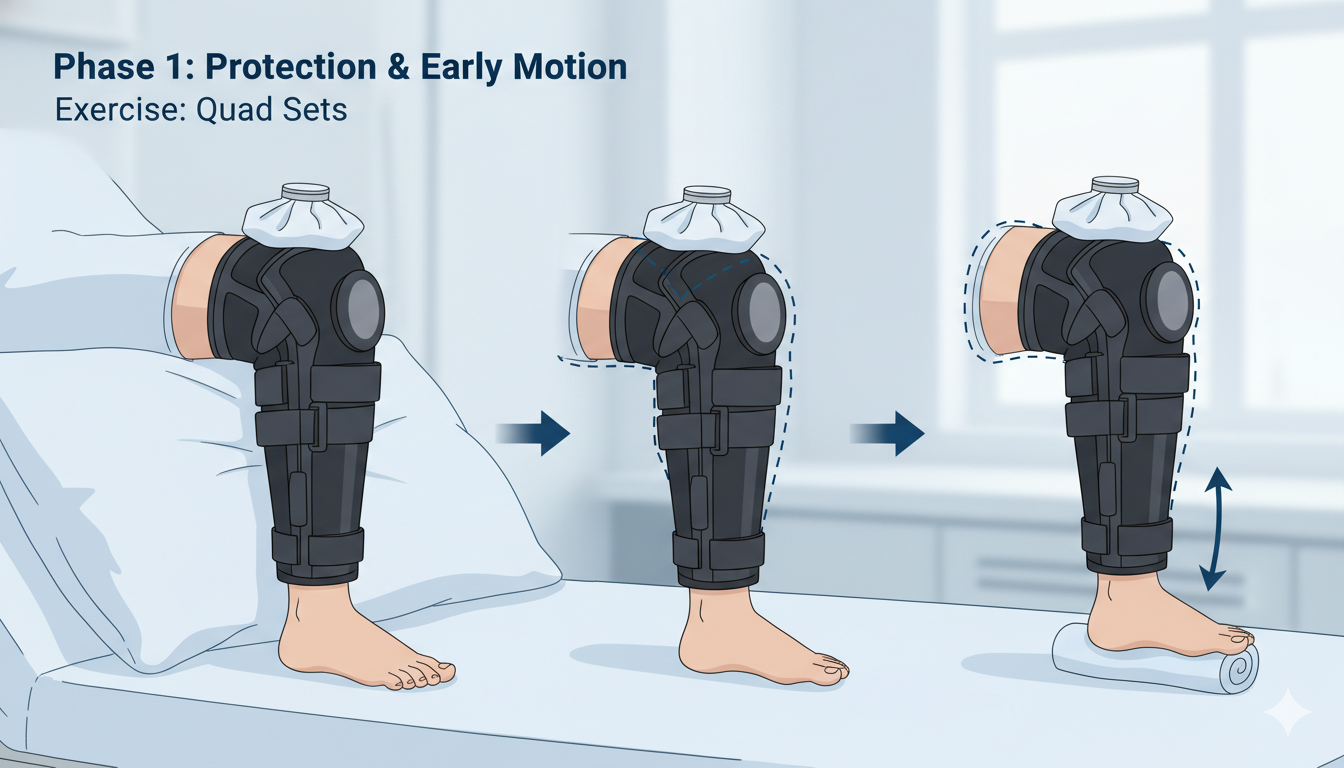
The first few weeks after surgery are all about being gentle. Your main goal in this part of the ACL rehab protocol is to reduce swelling and protect the graft. You will likely use crutches and a brace to keep things steady. It is very important to keep your leg straight when you are resting. This helps prevent stiffness later on. You might feel a bit tired or sore, but that is totally normal. Just focus on resting and icing your knee often to keep the puffiness down.
Even though you are resting, you can still do tiny movements. Your physical therapist will show you how to wiggle your toes and tighten your thigh muscles. These small “quad sets” are a big part of the ACL rehab protocol early on. They wake up the muscles that like to go to sleep after surgery. Don’t rush into walking without your crutches until your doctor says it is okay. Taking it slow now prevents big problems later. You are building a strong foundation for the rest of your recovery.
Getting Your Full Range of Motion Back
One of the biggest goals in any ACL rehab protocol is getting your knee to move fully. This means being able to straighten it all the way and bend it back comfortably. In the beginning, your knee might feel tight, like a rusty hinge. Gentle heel slides, where you slowly slide your foot toward your bottom while sitting, can help. Doing these daily makes a huge difference. You want your “new” knee to move just as well as your healthy one.
If you don’t work on straightening your leg early, it can make walking difficult later. That is why physical therapists focus so much on extension in the ACL rehab protocol. You might spend time propping your heel up on a pillow to let gravity help flatten your knee. It might feel a little uncomfortable, but it shouldn’t be sharp pain. Staying consistent with these stretches is the “secret sauce” to a successful recovery. Soon, that stiffness will start to melt away, and you’ll feel more like yourself.
Moving to Phase 2: Strengthening (Weeks 2–6)
Once your incisions have healed and the swelling is down, things start to get a bit more active. In this phase of the ACL rehab protocol, we focus on getting your leg muscles to fire properly. You might start doing straight leg raises and mini-squats. It feels great to move more, but you still have to be careful. The graft is actually at its weakest point during these weeks, so no twisting or turning! Stick strictly to the exercises your therapist gives you to stay safe.
During this time, you might start walking without crutches if your gait looks normal. This is a huge milestone in the ACL rehab protocol! It feels amazing to have your hands free again. You will also start working on balance. Standing on one leg while holding onto a chair helps your brain talk to your knee again. This “proprioception” is vital for preventing future injuries. Keep celebrating the small wins, like being able to walk to the kitchen to grab a snack on your own.
Building Real Power (Weeks 6–12)
Now that you can walk well, it is time to build some real strength. This part of the ACL rehab protocol involves more “functional” movements. You might start using a stationary bike or a leg press machine at the gym. Building up your quadriceps and hamstrings is key because they act like a second set of armor for your knee. The stronger these muscles are, the less stress goes onto your new ACL. It is hard work, but it really pays off.
You will also start working on your core and hip strength. Many people don’t realize that hip strength helps keep the knee in the right position. A complete ACL rehab protocol looks at the whole body, not just the joint. You might do “clamshells” or use resistance bands for extra challenge. Always remember to listen to your body. If your knee starts to swell after a workout, it means you might need to dial it back just a little bit. Consistency is always better than intensity.
Master Recovery: The Complete Detailing Table
| Phase | Timeline | Primary Goals | Key Exercises |
| Phase 1 | 0–2 Weeks | Reduce swelling, reach full extension | Quad sets, heel slides, ankle pumps |
| Phase 2 | 2–6 Weeks | Normal walking, early strengthening | Straight leg raises, mini-squats, balance |
| Phase 3 | 6–12 Weeks | Increase muscle mass, light cycling | Leg press, step-ups, stationary bike |
| Phase 4 | 3–6 Months | Introduction to impact and agility | Jogging, hopping, lateral shuffling |
| Phase 5 | 6–9+ Months | Return to sports specific drills | Cutting, pivoting, full-speed practice |
Learning to Run and Jump (Months 3–6)
Around the three-month mark, you get to do the things most people miss: impact! Your ACL rehab protocol will now include light jogging and small hops. This is an exciting time, but it requires a lot of control. Your therapist will watch how you land to make sure your knee doesn’t cave inward. Learning to land softly is a skill that protects your graft during high-speed movements. It is like teaching your body how to be an athlete all over again.
In this stage, you will also start doing lateral (side-to-side) movements. Since the ACL keeps the knee stable when you turn, these exercises are a must-have in your ACL rehab protocol. You might jump over small foam hurdles or do “shuttle runs.” Each week, you will feel faster and more confident. It is important to stay patient here. Even if you feel 100%, the internal healing of the ligament takes a long time. Jumping the gun can lead to setbacks you don’t want.
Returning to Sports: The Final Test
The final part of the ACL rehab protocol is the most intense. This usually happens between 6 and 9 months, or even longer for some people. You will practice “cutting” movements, which are quick changes of direction. This mimics what happens in soccer, basketball, or football. Before you are cleared to play, you will likely take a “Return to Play” test. This test checks if your surgical leg is almost as strong as your healthy leg.
Being mentally ready is just as important as being physically ready. A good ACL rehab protocol helps you trust your knee again. You might feel nervous the first time you go for a full-speed tackle or jump for a rebound. That is okay! By practicing these moves in a safe environment first, you build the “muscle memory” needed for game day. Once you pass your tests and your doctor gives the green light, you can finally put your jersey back on and play.
Why Nutrition and Sleep Matter
A lot of people forget that recovery happens outside of the gym too. While following your ACL rehab protocol, you need to feed your body the right “bricks” to rebuild. Eating plenty of protein helps repair the muscles you are working so hard in therapy. Vitamins like Vitamin C and Zinc are also great for tissue healing. Think of food as fuel for your recovery. If you eat well, your body has the energy it needs to fix the damage and get stronger.
Sleep is another “superpower” for your recovery. When you sleep, your body releases growth hormones that help heal your surgery site. If you are tired and run down, your ACL rehab protocol will feel much harder. Try to get at least eight hours of rest every night. Also, staying hydrated helps keep your joints lubricated and moving smoothly. Taking care of your whole self makes the physical therapy sessions much more effective. It is all connected!
Common Challenges and How to Beat Them
Recovery is rarely a perfectly straight line. There will be days when your knee feels stiff for no reason or you feel frustrated with the pace. This is a normal part of the ACL rehab protocol experience. When you hit a “plateau” where progress feels slow, don’t give up! Sometimes your body just needs a few days of extra rest. Talk to your physical therapist about how you are feeling. They can adjust your exercises to keep things fresh and fun.
Another challenge is “fear of reinjury.” It is very common to be scared of hurting your knee again. To beat this, focus on the facts. If you have followed your ACL rehab protocol and your muscles are strong, your risk is much lower. Using a mirror during exercises can help you see that your knee is stable. Surround yourself with supportive friends and family who can cheer you on. A positive mindset is a very powerful tool during a long recovery like this.
The Importance of a Good Physical Therapist
You shouldn’t try to do this alone. Finding a physical therapist you trust is a huge part of a successful ACL rehab protocol. They are like a coach for your recovery. They see things you might miss, like your hip dropping when you walk or your knee not being quite straight. They also provide the motivation you need on those days when you just want to stay on the couch. A therapist keeps you safe while pushing you to reach your full potential.
Every person is different, so a “one-size-fits-all” plan doesn’t always work. A great therapist will tweak the ACL rehab protocol to fit your specific goals. If you want to get back to skiing, your exercises will look different than someone who just wants to go for long hikes. Make sure to ask questions and be honest about any pain you feel. This partnership is the key to getting a 10/10 result and getting back to the activities you love the most.
FAQs About ACL Recovery
How long does a full ACL rehab protocol take?
Most people take between 9 to 12 months to fully return to high-impact sports. However, you will be walking and doing daily tasks much sooner, usually within a few weeks.
Can I skip physical therapy if I feel fine?
It is not a good idea to skip sessions. Even if your knee feels okay, the muscles need specific training to protect the new ligament. The ACL rehab protocol is designed to prevent future tears.
When can I drive after ACL surgery?
If it was your left leg and you have an automatic car, you might drive in a week or two. If it was your right leg, you usually need to wait 4 to 6 weeks until you can brake quickly and safely.
Will I need to wear a brace forever?
Most people only wear a brace during the early stages of the ACL rehab protocol. Some athletes choose to wear one when they return to sports for extra confidence, but it is often not required.
Does the surgery hurt a lot?
The first few days can be uncomfortable, but doctors give you medicine to help. As you move through your ACL rehab protocol, the soreness changes from “surgery pain” to “muscle workout soreness,” which feels much better.
What happens if I don’t follow the protocol?
If you don’t follow the plan, your knee might stay stiff, or the new ligament could stretch out or tear again. Sticking to the ACL rehab protocol is the best way to ensure your surgery is a success.
Conclusion: Your Path to a Stronger Future
Recovering from an ACL injury is a long marathon, not a short sprint. It takes patience, hard work, and a positive attitude. By following a structured ACL rehab protocol, you are giving yourself the best chance to return to your favorite activities without fear. Remember that every exercise you do and every ice pack you use is a step toward a stronger knee. You have the power to overcome this challenge and come back even better than before.
Don’t be afraid to ask for help when you need it and celebrate every milestone along the way. Whether it is your first step without crutches or your first time back on the field, these moments matter. Your journey is unique, and you should be proud of the effort you are putting in. Stay focused, stay consistent, and keep moving forward. You’ve got this! If you found this guide helpful, share it with a friend who might be starting their own recovery journey.